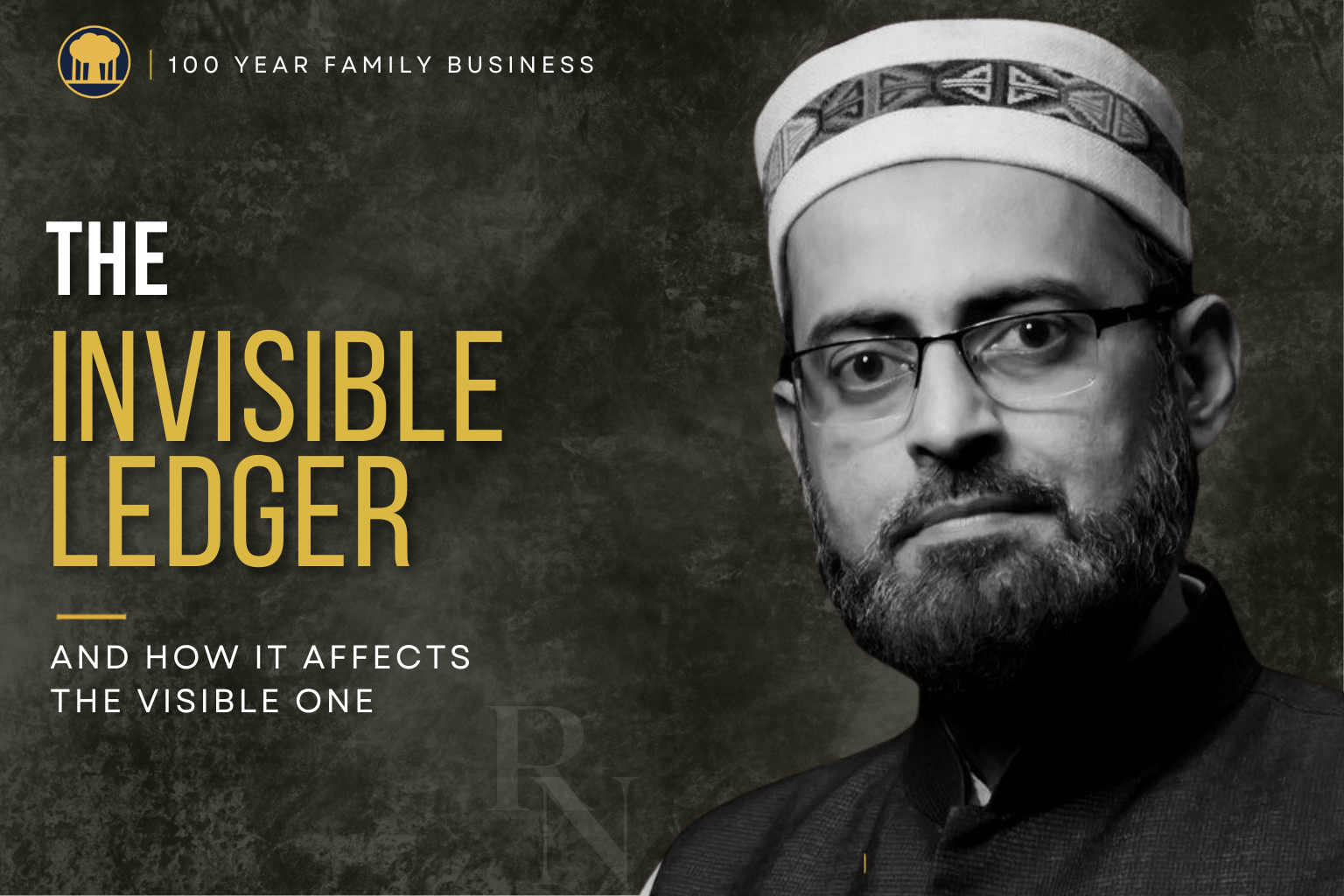
Building something that lasts a hundred years is not mainly about avoiding trouble. It is about capability moving outward — into the next generation, into the people around you, into the business itself — until the business is still governed by you, but no longer operated by you.
See where you stand 16 questions · About seven minutes · Free
The banyan doesn't grow tall by hurrying. It grows by putting down new roots from its own branches.
Every one of those roots was once a branch that was allowed to reach the ground on its own.
Most advice to family businesses starts with what goes wrong between people. That is one part of the picture, and it is not the largest part.
The businesses that last are the ones where capability keeps getting rebuilt — where a second generation arrives genuinely wanting the work and genuinely able to do it, where senior people who aren't family choose to stay, where the product line is renewed before the old one slows, and where enough of the work runs on process rather than on one person's memory.
None of that happens by itself, and none of it happens quickly. It happens by handing over real things early enough that the next person can make their own mistakes and their own decisions — and by the generation above learning to welcome that rather than correct it.
And none of it is about making the founder unnecessary. In most families I meet, the founder is still the most capable person in the building and will remain so for years. The aim is narrower and far more useful: to stop the small things needing you, so that the large ones still can. Governed by you. Not operated by you.
There is a second thing most founders never get to. The owner's job is not the manager's job. Preparing the next owners, setting the terms, and putting a number on value the business already holds — brand, land, know-how, distribution — is work no employee can do for you. Do only the manager's job well enough for long enough and you end up with a business that runs beautifully and an asset that was never fully used.
This is comprehensive business advisory that takes the family seriously, rather than family advice that occasionally mentions the business. 100 Year Family Business is where that work gets thought through in public.

Sixteen questions across product, people, process and ownership. You get a score for each pillar — so the answer isn't a verdict, it's a direction.
See where you stand About seven minutes. Your score and a PDF report at the end.Not a framework to be admired. A map of where your business currently has the most room to build.
What you sell, whether it is still being renewed, and the value already sitting in the business uncounted. A hundred-year business is rarely a hundred-year product — and almost every established family firm owns brand, land, know-how or distribution that could be earning and isn't.
Capability around the founder, not merely beneath him. A bench that can decide, senior professionals who choose to stay, and people who behave like owners — which depends far more on whether disagreeing with you is safe than on any incentive scheme.
What runs without anyone remembering to run it. Documented work, numbers you'd act on without re-checking, an operating rhythm, and technology used properly rather than merely bought.
The work only the family can do. Whether the next generation genuinely wants it, whether they are being prepared rather than merely included, whether anything has truly been handed over — and whether it is clear what is earned for capital, for work, and for risk.
Essays on camera about succession, ownership, money and the quiet things that decide whether a business outlives its founder.
Every family business keeps two sets of books. One is audited. The other records who sacrificed, who was overlooked, who was forgiven and who never was. The second one decides the fate of the first.
Watch on YouTubeI am not writing about family business from a distance. I am inside one.
Trained as a chartered accountant, I spent my early years reading businesses through their numbers. I now spend my time building one — reviving an industry that had stopped, in a place where it once employed thousands. Watching what a business leaves behind when it ends, and what it takes to begin one again, changes how you think about the word continuity.
Much of what I have found useful does not come from business literature at all. It comes from the older traditions — the understanding of trusteeship, of zimmedaari, of wealth as something held rather than owned. A family business is the most practical test of that idea I know.
This site is where I think about it in public. My personal writing, speaking and other work lives at rahimnoor.com.
Written for the people who actually have to make these decisions — founders handing over, and the generation being handed to.
Sixteen questions, a score for each of the four parts, and a plain read on what the work in your weakest one actually involves. About seven minutes, and you can download the whole thing as a PDF.
Take the 100-Year Scorecard